Something interesting happened this year, and I’m not sure enough business owners have clocked it yet. The things that used to just build trust with human visitors — credentials, reviews, a real bio, a security badge — are now also the exact things AI engines scan before deciding whether to cite your business in an answer. Website trust signals aren’t a “nice touch” anymore. They’re doing double duty, whether you planned for that or not.
Here’s what I mean. When ChatGPT or Google’s AI Overview decides which source to pull into a response, it’s not just checking if your content is relevant. It’s checking if you’re safe to vouch for. Marketers call this E-E-A-T — experience, expertise, authoritativeness, trust — and it has become the backbone of how both search engines and AI systems decide who gets cited and who gets skipped.
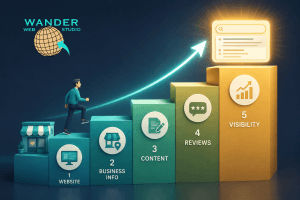
Let’s walk through what really moves the needle. This series started with getting found by AI search, and it ends here — because being found doesn’t matter much if nobody believes what they find.
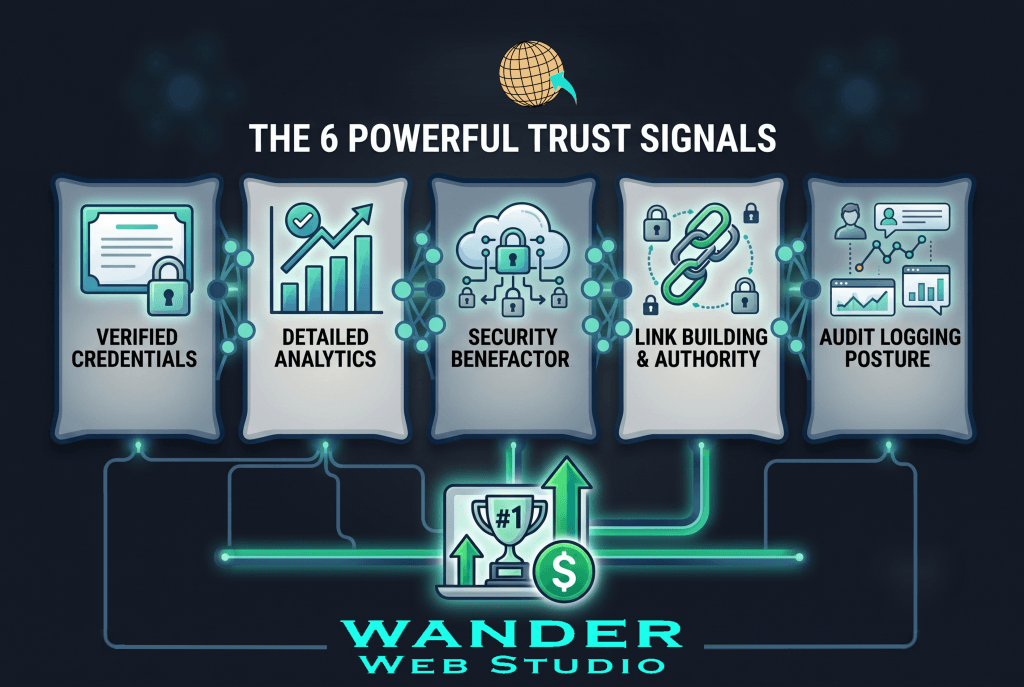
Anonymous “admin” posts and generic company bylines are quietly becoming a liability. Both readers and AI crawlers look for a named author with actual credentials — someone who can plausibly be held responsible for what they wrote. It doesn’t need to be elaborate. A short bio with real experience does more for trust than people expect.
I'll admit something a little embarrassing. While I was digging through our own site not long ago, checking how it looked from a crawler's perspective, I noticed every single one of our blog posts was published under "admin." Not a name. Not a face. Just... admin. I'd walked past it a hundred times and never really seen it, if that makes sense.Here's the thing — I know who wrote those posts. I know the late nights, the research, the number of times a paragraph got rewritten because it didn't sound right yet. But a stranger landing on that page? They just see "admin." No accountability, no person to picture, nothing to trust. And now, apparently, the AI models scanning our content see the exact same blank space we'd been overlooking for months.It wasn't a redesign. It wasn't new content. It was just... a name. A short bio. Maybe a sentence about who actually sits down and writes this stuff. That was it. And it's strange, because it's one of the smallest fixes we could make, and I think it might matter more than half the "big" changes we've obsessed over this year.Sometimes the fix really is that simple. You just have to actually look.
This one’s simple, and a lot of businesses just… skip it. If you’re certified, licensed, or partnered with recognized organizations, that information needs to live somewhere visible, not buried in a PDF nobody opens. It’s one of the fastest website trust signals to add, and one of the easiest for both humans and machines to verify.
At Wander Web Studio, this is exactly why we keep our own certifications and partnerships front and center rather than tucked away — it’s not vanity, it’s just proof we are who we say we are.
Trust isn’t only about content credentials; it’s also about whether visitors (and their data) are safe on your site. This has become a bigger deal than most business owners realize — and it ties into a related conversation worth having about accessibility, too. We wrote about the legal side of this in our post on website accessibility compliance, and the security side deserves the same attention. Our parent company, Cocha Technology, focuses specifically on protecting client data — worth a look if you’ve never audited your own site’s security posture.
AI systems don’t just trust what you say about yourself. They weigh outside mentions — reviews, press coverage, directory listings, other sites linking to yours. If literally nothing on the internet references your business except your own homepage, that’s a gap worth closing, slowly, over time. Guest posts, local press, industry directories — it adds up more than people expect.
This surprises most people, but it fits here too: how your content links together internally is itself a trust signal. A site where blog posts, service pages, and resources connect logically tells both visitors and crawlers that you know your own subject matter well enough to organize it. A scattered, disconnected site reads as less authoritative, even if the individual pages are well written.
We’ve covered this exact idea in our post on internal link siloing — and honestly, if you’ve read the earlier posts in this series, you’ve probably noticed we keep coming back to it. That’s not an accident. It’s genuinely one of the highest-impact, most overlooked pieces of the whole picture.
Stale content is a quiet trust killer. Outdated stats, old pricing, a “2023” reference still sitting on your homepage — AI engines increasingly favor content that’s been reviewed and updated recently, since freshness is one signal of ongoing authority. Brands leading in AI visibility tend to revisit their core pages on a regular schedule, not just once and done.
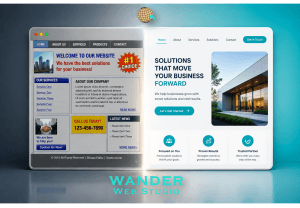
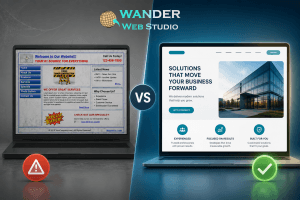
If you’ve followed along with this whole series, here’s the honest thread running through all four parts: getting found by AI search doesn’t matter if your site looks like a template, and looking distinctive doesn’t matter if nobody trusts what they land on. Website trust signals are the piece that ties visibility and design together — they’re what turns a visit into a decision.
A few things worth checking on your own site this week:
None of this happens overnight, and I’d be lying if I said it did. Trust builds slowly — a bio here, a certification badge there, a cleaned-up internal link structure over a few weeks. But it compounds, the same way the AI search shift we talked about earlier in this series compounds. The businesses that are paying attention now are going to have a real head start by the time this becomes table stakes for everyone else.
If it feels like a lot to tackle at once, that’s fair — it usually is. This is the kind of full picture work our team walks through during a website redesign and development engagement, where design, structure, and trust get addressed together instead of as separate afterthoughts. Because at the end of the day, a website that looks great but isn’t trusted, and isn’t found, is just a really nice-looking file sitting on a server somewhere.
Turn your website into a high-performance business tool.
Through our parent company, Cocha Technology Inc., we are officially multi-certified as: WBE | MBE | SBE | HABE
4321 Kingwood Drive, Suite 222
Kingwood Texas 77339
Phone: 281-607-0616
Email: info@wanderwebstudio.com
Operating on Central Standard Time (CST) | Serving Clients Across All Time Zones
Copyright © Wander Web Studio. All Rights Reserved.